Deck Builder
Open a deck and click Edit, or click + Build on the Decks page to start from nothing.
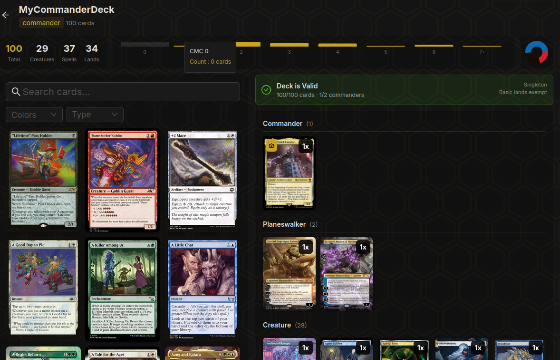
Finding cards#
Click + Add Cards to open the search panel. Search matches name, oracle text and type line, so "draw a card" and "goblin" both work. Filters narrow it down:
- Colours and colour identity
- Mana value: at most, exactly, or at least
- Type, subtype and keyword
- Rarity, set, and a collection of yours
- Game Changers only, for checking what's pushing your bracket
Click a card to add one. The + and − on each row in the deck adjust the count, and dropping to zero removes it. Choosing a different printing for a card shows the current price of each print, foil and non-foil, so you can see what the art swap costs before you make it.
The command zone#
For Commander formats the command zone sits above the card list. Set your commander there, add a partner or background with Set Partner, and pick a companion if you're running one. Oathbreaker gets a signature spell slot, Pendragon a Doctor slot. Once a commander is set, cards outside its colour identity are flagged in the list.
Deck Shape#
The strip under the deck name counts lands, ramp, draw, removal, protection and board wipes and shows each against a target range. It's a rough guide, not a rule, but a bar in the red is usually worth a second look.
Legality#
The Legality slice checks the deck against its format as you edit: size, singleton, colour identity, banned cards, and format-specific rules like PDH's uncommon commander or Dandân's fixed core. Issues stop the deck being legal. Warnings don't.
Legality only matters if the table is set to Strict. A Relaxed table lets you bring anything, so a deck with issues is still playable among friends.
Deck settings#
The Settings button opens name, description, format, privacy (private, friends or public), and Card Art. Card Art picks which printing's image is used for every card: the default, the latest printing, or the original. For Commander decks you can also override the estimated bracket here, or clear an override and go back to the estimate. See Bracket Estimates.
Card changes save as you make them. Settings save when you click Save.
Tags#
Supporters can tag cards within a deck (removal, wincon, cut candidate, whatever you like) and filter the list by tag. Tags come along with JSON exports.
Notes#
The Notes slice is a plain text box for the deck. Cards to try, matchup notes, why that one card is there. It has its own save button.
Collaborate#
Collaborate adds a friend as an editor. Both of you can change the deck and it stays in the owner's library. A collaborator can leave from the same menu, or save a copy to their own decks.
Playtest#
The ⋯ menu has Playtest: pick another of your decks in the same format and you're in a two-seat game controlling both sides. Good for goldfishing and for checking a combo actually works before you take it to a table.